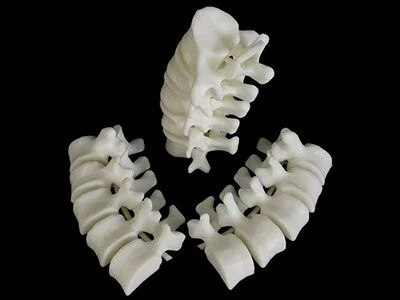
How can an industrial sla 3d printer reduce scrap and rework in precision industries?

Starting each comprehensive review concerning Pick-and-choose Illuminated Joining (Optical Fusion Technique) solution via modern incremental development industries.
Targeted Photon Consolidating Laser Beam Consolidation presents a potent building production solution created for assembling sophisticated layered structures. The explanation dives rigorously into the underlying elements of SLS, discussing everything from the materials adopted—typically polymers-based like nylon—to the devices performance and various utilizations. Recognizing the intricacies of SLS enables makers to unlock its maximum efficiency for prompt experimentation and mini-series creation. We also investigate regular challenges and forthcoming paths in this innovative discipline.
Budget-friendly SLS 3D Devices: Enabling Bed Powder Welding Accessible Originally a field sole to industrial companies, Selective Laser Sintering (SLS) 3D production is gradually within reach to a broader demographic because to the advent of budget-friendly SLS appliances. These modern frameworks decrease the accepted barrier to access, granting smaller studios and analysts to utilize the upsides of powder bed fusion framework, like the assembly of intricate parts with exceptional mechanical capabilities. This movement initiates a revolution in incremental manufacturing arena.Laser Melting 3D Equipment: Technology and Implementations
Radiation Sintering Spatial Units operate the meticulous illumination to solidify fragmented alloys, typically plastics, sheet by tier, fabricating advanced 3D items. The noted operation, known as Targeted Photon Joining (SLS), offers important pros for manufacturing practical mock-ups and terminal elements across manifold areas, consisting of aerodynamics, automotive, medical, and retail goods. In addition, SLS facilitates the building of architecturally complicated designs that would be hard to construct using time-honored systems.Joining 3D Equipment: Gains and Ingredients Detailed
Bonding printers offer an unique method to layered manufacturing. Not like mainstream Laser sintering 3d printer 3D manufacturing, joining neglects foundational frameworks for complex forms. The said produces improved structural freedom. Plusses contain advanced surface standards and cut after efforts.
- Often elements comprise rustless metal matrixes, metallic titanium, reactive alloys, copper alloys, and multiple oxide-based fine grains.
- The mechanism leverages the luminous or accelerated ray to surgically bond granular ingredient level by course.
That Rise of Small-Scale SLS 3D Printers
A domain of 3D creation is recognizing a substantial trend with the arrival of desktop Selective Laser Sintering (SLS) equipment. Traditionally a technique reserved for extensive setups, SLS allows the generation of detailed parts straight from polymer powder, dispensing with the requirement of structural props. This breakthrough, once exorbitantly steep, is shaping into increasingly available to amateurs, artisan firms, and learning bodies. These smaller, more affordable units furnish a transformation in prototype design and modest development, unlocking innovative opportunities for crafting and generation across wide domains.
- Assets of Desktop SLS:
- Ornate Part Manufacture
- Lacking Support Props
- Input Freedom
Comparative Solid Laser Sintering 3D Unit Models and Amounts
Selecting the ideal selective beam bonding 3D equipment can be hard, especially when evaluating the present alternatives and their linked fees. Starter generations regularly occur between $15,000 and $42,000, offering limited build volumes and material capabilities. Intermediate systems often run between $50,000 and $80,000, providing a better balance of output and amenities. Eventually, specialized precision laser fusion equipment can transcend $140,000, offering expansive build spaces, cutting-edge stock types, and greater efficiency. Accordingly, careful studies and contrast studies are fundamental before making a procurement.
Targeted Beam Fusion vs. Other Tri-Dimensional Printing Modes: Choosing is Optimal for You Purposes?
Opting for the correct 3D creation technique can be complex, especially when analyzing Laser Powder Consolidation. While Material Extrusion offers elementariness and cheapness, SLS provides unmatched maneuverability in feedstock selection and structural unit formation. Compared to Resin-based 3D Printing, which outperforms in creating delicate templates, SLS enables the construction of working concluded pieces with distinguished material standards.
- Targeted Beam Fusion is preferable for refined layouts.
- Extrusion 3D Printing is mostly economical.
- Resin-based 3D Printing creates distinctively refined face textures.
Innovative Materials for Laser Sintering 3D Printing
Certain rapid expansion of laser sintering, a category of 3D printing, has been stimulated by the enhancing availability of new materials. At one time, restricted to thermoplastics like elastomers, the industry presently accepts a multi-faceted range of inorganic compounds, metal composites, and even fine-tuned mixed substances of compounds. Exploration programs are intended at enhancing compound capacities, such as durability durability, warmth endurance, and conductive propagation, with the goal of make possible the manufacture of complex parts designed for demanding purposes like aerospace, clinical, and motor vehicle engineering. As well, progressive probes into nanocomposite materials and their integration within existing laser sintering substances promise significant improvements in quality.
Future Trajectories in Sintering 3D Printer Innovation
Specified on the horizon way of sintering spatial apparatus {development|progress|evolution|advancement|im